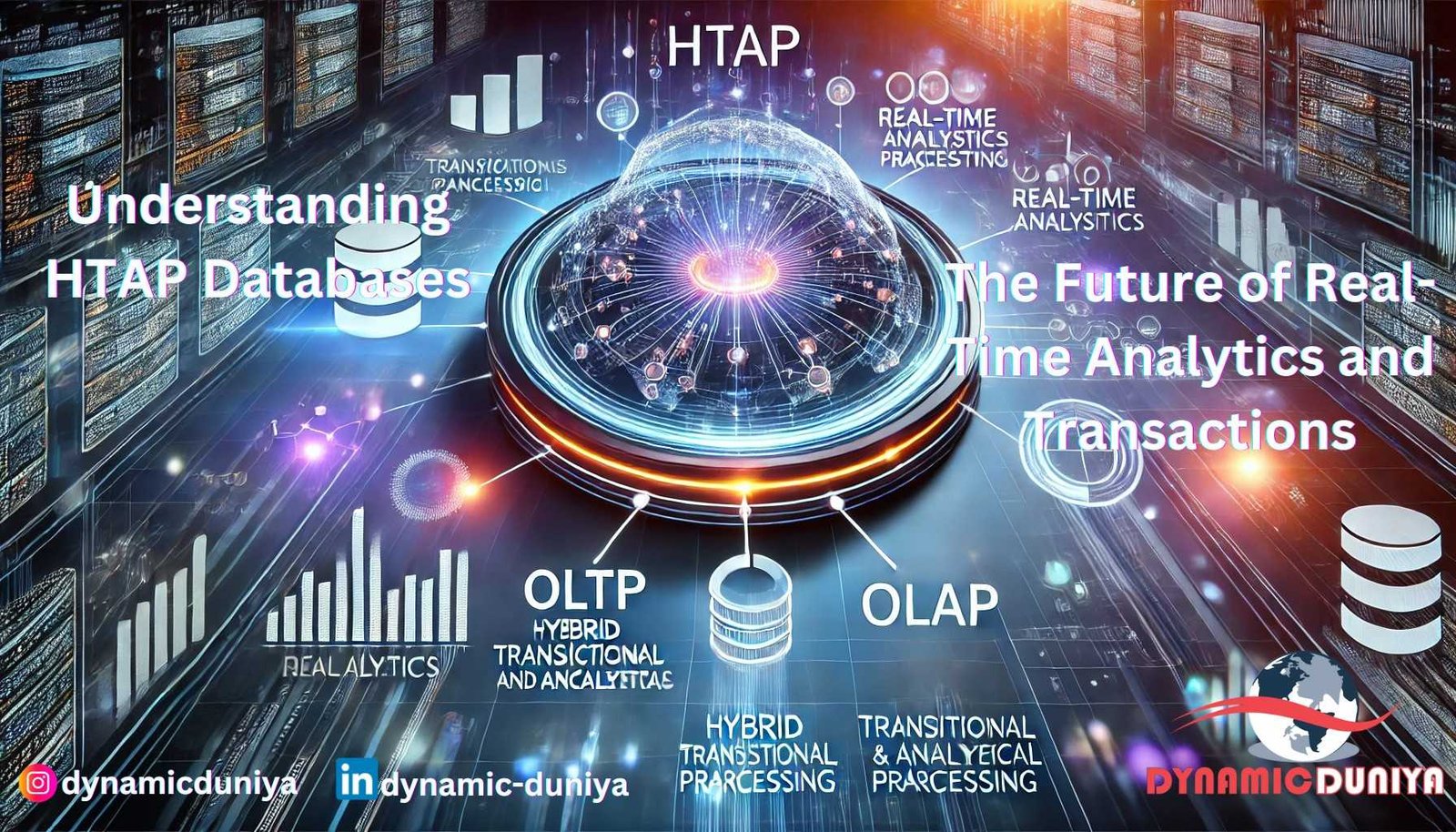
HTAP databases revolutionize data processing by combining transactional and analytical workloads in a single system. This blog explores their architecture, query optimization techniques, performance benefits, and practical SQL examples, helping businesses achieve real-time insights without ETL delays.
Modern businesses require real-time decision-making based on transactional data. Traditional database architectures separate Online Transaction Processing (OLTP) for operational workloads and Online Analytical Processing (OLAP) for business intelligence and analytics. However, this separation creates inefficiencies, delays, and increased costs. Hybrid Transactional and Analytical Processing (HTAP) databases solve these challenges by enabling real-time analytics on live transactional data without the need for ETL processes.
This article explores HTAP databases, their architecture, query optimization techniques, performance improvements, challenges, and future trends, along with practical SQL examples using TiDB, SingleStore, and Oracle.
HTAP is a new class of databases that combines OLTP and OLAP capabilities in a single system. Unlike traditional architectures where transactional data is extracted, transformed, and loaded (ETL) into a separate OLAP system, HTAP databases eliminate this latency, allowing businesses to make instant data-driven decisions.
HTAP databases use a hybrid architecture that optimally serves both transactional and analytical workloads. They achieve this by utilizing:
HTAP databases typically have two storage engines:
Example: TiDB
HTAP systems intelligently route queries to the appropriate storage engine. Simple lookups are executed on the OLTP engine, while complex aggregations are processed by the OLAP engine.
Example: Query Execution in TiDB
SELECT /*+ READ_FROM_STORAGE(TIFLASH[t]) */ COUNT(*) FROM transactions t WHERE amount > 1000;This forces execution on the column store (TiFlash) for efficient aggregation.
HTAP databases continuously synchronize transactional data with the analytical engine to ensure consistency. Some databases prioritize strong consistency, while others favor eventual consistency to reduce performance overhead.
Optimizing queries in HTAP databases is more complex than in traditional OLTP or OLAP systems due to hybrid storage. Techniques include:
Query planners estimate the cost of executing queries on OLTP vs. OLAP storage and select the optimal plan.
Example: Query Plan Analysis in Oracle
EXPLAIN PLAN FOR
SELECT * FROM transactions WHERE amount > 5000;
SELECT * FROM TABLE(DBMS_XPLAN.DISPLAY());Materialized views store precomputed query results, reducing execution time for recurring analytical queries.
Example in SingleStore:
CREATE MATERIALIZED VIEW sales_summary AS
SELECT date, SUM(amount) AS total_sales FROM sales GROUP BY date;HTAP databases use hybrid indexing, combining B-Tree indexes for OLTP operations and bitmap indexes for OLAP queries.
Example of Hybrid Indexing in SingleStore:
CREATE COLUMNSTORE INDEX idx_sales ON sales (date, amount);
HTAP databases significantly enhance query performance through the following mechanisms:
HTAP databases leverage Massively Parallel Processing (MPP) to distribute analytical queries across multiple nodes.
Example in TiDB:
ET tidb_executor_concurrency = 10;
SELECT COUNT(*) FROM large_table;HTAP databases use Multi-Version Concurrency Control (MVCC) to provide consistent analytical queries without locking transactions.
Example in TiDB:
SELECT * FROM transactions AS OF TIMESTAMP NOW() - INTERVAL 1 SECOND;
Maintaining both row and column storage increases storage costs. Solutions include adaptive column storage and compression techniques.
Query planners must balance OLTP and OLAP workloads, making query tuning more complex.
Although HTAP reduces ETL latency, analytical queries may still experience slight delays due to synchronization.
HTAP databases must enforce role-based access control and encryption to prevent unauthorized access to sensitive data.
Transactional workloads benefit from horizontal sharding to distribute data across multiple nodes.
Example in TiDB:
ALTER TABLE orders SHARD BY HASH(user_id) PARTITIONS 8;HTAP databases employ distributed processing to accelerate analytical queries.
Cloud-native HTAP databases like SingleStore automatically adjust compute resources based on workload demand.
HTAP systems must protect both transactional and analytical data. Security measures include:
Row-Level Security (RLS): Restricts data access at a granular level.
Transparent Data Encryption (TDE): Ensures data is encrypted at rest and in transit.
Example in Oracle:
CREATE POLICY emp_policy ON employees
FOR SELECT USING (department = 'Finance');
HTAP is continuously evolving, with future advancements expected in:
HTAP databases bridge the gap between OLTP and OLAP, enabling real-time analytics on live transactional data. While challenges such as storage overhead and query optimization complexity exist, advancements in distributed architectures and AI-driven optimizations are making HTAP an essential technology for modern data-driven businesses.
Organizations adopting HTAP can significantly improve decision-making efficiency, reduce costs, and simplify their data infrastructure. As HTAP databases continue to evolve, they will play a pivotal role in the future of real-time data processing.
For businesses seeking to optimize their data infrastructure, evaluating HTAP solutions like TiDB, SingleStore, and Oracle Exadata is essential. Understanding the strengths and trade-offs of each system will ensure the best fit for specific workloads.
Sign in to join the discussion and post comments.
Sign in