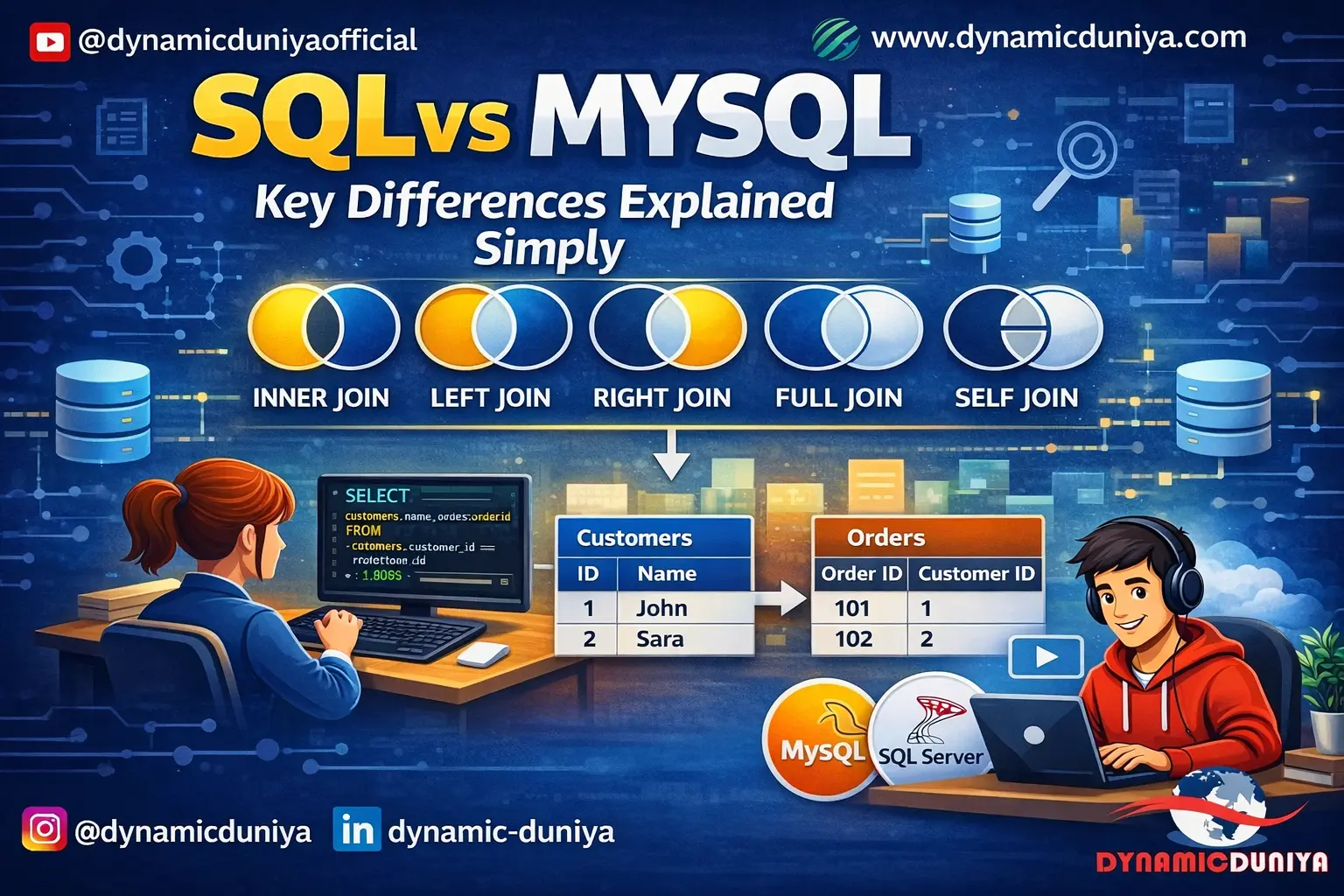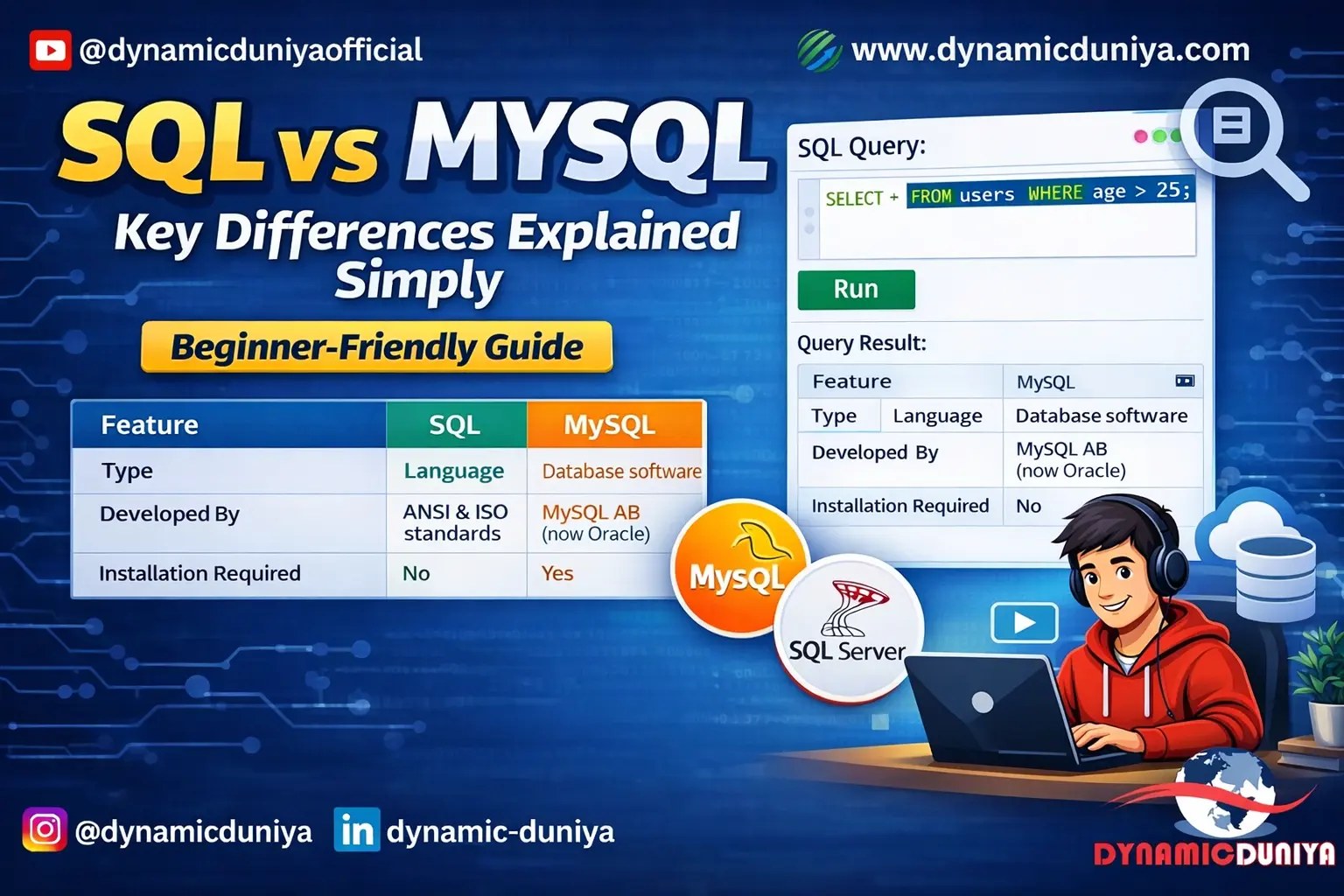
This blog provides a comprehensive comparison between SQL and popular relational database systems including MySQL, PostgreSQL, MS SQL Server, Oracle, SQLite, and MariaDB. It explains their differences, use cases, strengths, limitations, and licensing models—helping both beginners and professionals choose the right database for their applications.
In the world of data and software development, databases are the backbone of applications. Whether you're developing a small website or a large-scale enterprise application, choosing the right database system is crucial. Developers often encounter confusion around terms like SQL, MySQL, PostgreSQL, MS SQL Server, Oracle, SQLite, and others. These terms are related but represent fundamentally different concepts.
This blog aims to clearly distinguish between SQL as a language and the various database management systems (DBMS) that implement SQL in different ways. We'll dive deep into the strengths, weaknesses, and ideal use cases for each major database system, helping both beginners and professionals make informed decisions.
SQL (Structured Query Language) is a domain-specific language used for managing and manipulating relational databases. It is not a database itself but a language that is used across multiple database systems to perform tasks such as:
All relational database systems use SQL, although some may include proprietary extensions.
Relational databases implement SQL in different ways. Below is a detailed comparison of the most commonly used relational database systems:
Type: Open-source RDBMS (Relational Database Management System)
License: GPL (owned by Oracle Corporation)
Use Case: Ideal for web applications, especially in the LAMP stack (Linux, Apache, MySQL, PHP/Python/Perl).
Strengths:
Limitations:
Type: Open-source Object-Relational DBMS
License: PostgreSQL License (permissive open-source license)
Use Case: Best suited for complex applications requiring advanced data types and analytics.
Strengths:
Ideal for geospatial data (PostGIS extension)
Limitations:
Type: Proprietary RDBMS
License: Commercial (Microsoft)
Use Case: Enterprise-level applications, especially in environments using Microsoft technologies (.NET, Azure).
Strengths:
Limitations:
Type: Proprietary Object-Relational DBMS
License: Commercial (Oracle Corporation)
Use Case: Mission-critical enterprise applications (finance, telecom, government).
Strengths:
Limitations:
Type: Serverless Embedded RDBMS
License: Public domain
Use Case: Mobile applications, embedded systems, prototyping.
Strengths:
Limitations:
Type: Open-source RDBMS (Fork of MySQL)
License: GPL
Use Case: Direct replacement for MySQL with added features and community-driven enhancements.
Strengths:
Limitations:
| Scenario | Recommended DBMS |
|---|---|
| Small to medium web applications | MySQL, MariaDB |
| Complex applications and analytics | PostgreSQL |
| Windows enterprise environments | MS SQL Server |
| Mission-critical enterprise systems | Oracle Database |
| Mobile or embedded systems | SQLite |
| MySQL replacement with improvements | MariaDB |
While this blog focuses on relational databases, it is worth mentioning popular NoSQL alternatives for specific use cases:
| NoSQL DB | Model | Use Case |
| MongoDB | Document | Applications requiring flexible schemas |
| Cassandra | Column | High-volume write-heavy applications |
| Redis | Key-Value | Caching, real-time data processing |
| Firebase | Realtime DB | Mobile and web apps with live sync |
SQL is the foundational language for managing relational databases, but each RDBMS has its own implementation, optimizations, and strengths. Understanding the differences between MySQL, PostgreSQL, Oracle, MS SQL Server, SQLite, and MariaDB allows you to choose the best fit for your application’s needs.
Whether you're just starting out or managing enterprise-scale systems, selecting the right database is a decision that can significantly impact your project's scalability, performance, and maintainability.
Sign in to join the discussion and post comments.
Sign in