Learn how to overcome MySQL’s column and row-size limits with five powerful strategies, including engine tweaks, schema design patterns, and modern JSON/EAV approaches.
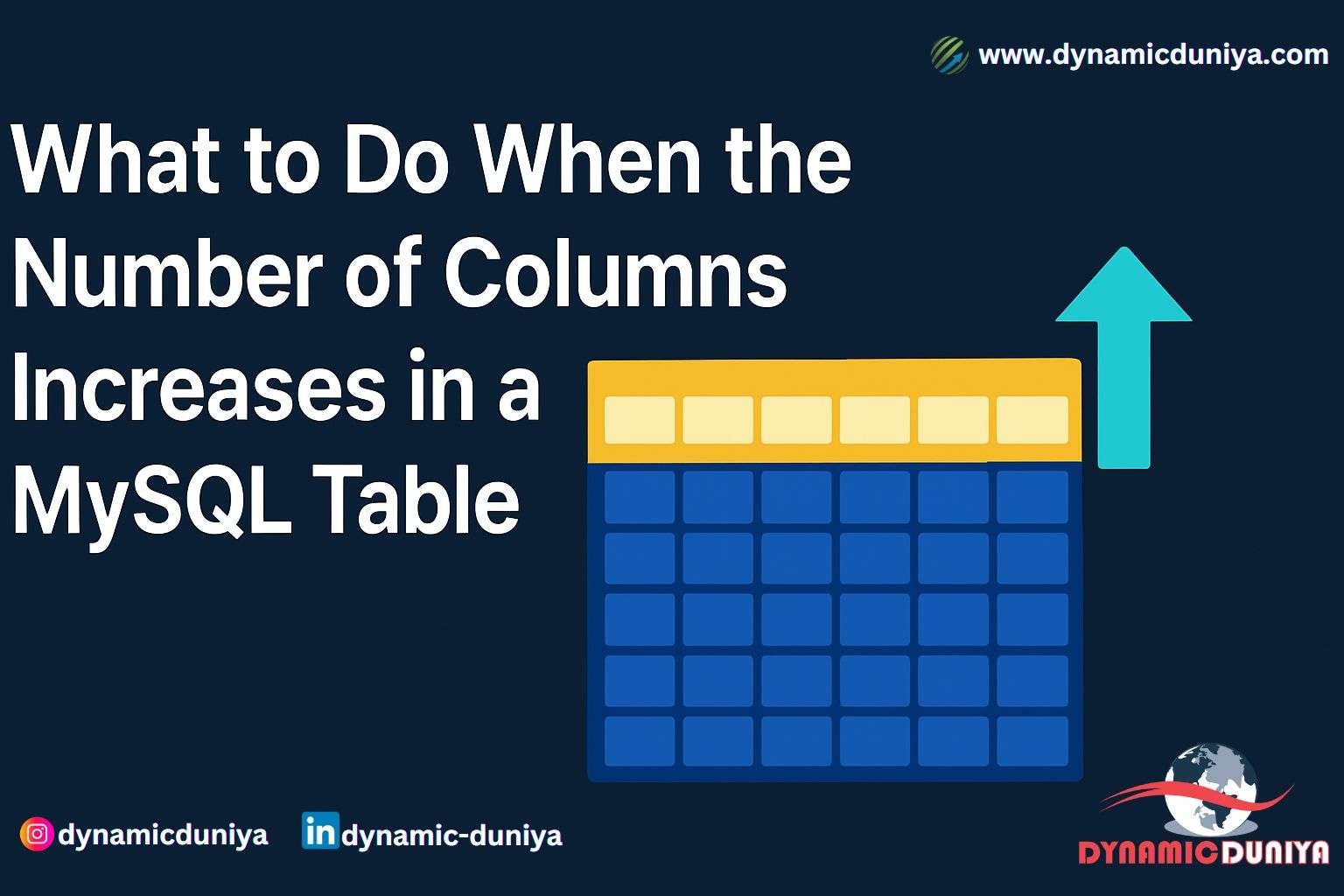
Maintaining a table with hundreds—or even thousands—of columns can quickly become unmanageable. MySQL imposes hard limits on column counts and row sizes, leading to errors like ERROR 1117 (HY000): Too many columns or failed ALTER TABLE operations. Below, we explain key concepts and walk through five strategies to keep your schema healthy and performant.
TEXT/BLOB, reducing in-row size; Fixed stores full payload in the row.id).key, value) rather than columns.Goal: Squeeze your schema under InnoDB’s 1017-column hard limit (practical: ~600–1000).
INT with SMALLINT or TINYINT for flags and counters.CHAR(10) or even a fixed-length BINARY field.SET type (8 bytes) instead of separate TINYINT(1) columns.DECIMAL(10,2) into an integer by multiplying by 100 (e.g., store 1234 for $12.34).Tip: Run
SELECT JSON_PRETTY(information_schema.COLUMNS) …to review column definitions and size attributes quickly.
Pros: Full ACID, foreign key support, crash-safe.
Cons: Diminishing returns; expect ~800–1000 max columns after optimization.
Goal: Use MyISAM’s 2599-column hard limit (practical: ~1400–1600).
ALTER TABLE your_table ENGINE=MyISAM;TEXT so only 4-byte pointers remain in-row.ALTER TABLE ADD COLUMN until you hit the limit.Keyword: Dynamic Row Format — MyISAM’s
Dynamicformat stores variable-length payloads off-row, reducing in-row footprint.
Pros: More columns; simple file-based storage.
Cons: No transactions, table locks, manual crash recovery, no foreign keys.
Goal: Break a monster table into logical chunks.
CREATE TABLE entity_core (
  id INT PRIMARY KEY,
  core1 … coreN
);
CREATE TABLE entity_ext1 (
  id INT PRIMARY KEY,
  extA … extZ,
  INDEX(id)
);
-- JOIN on id when querying across parts
Why it works: Each subtable stays well under column & row-size limits.
Pros: Better organization, feature-based grouping, fewer column headaches.
Cons: More joins, schema management overhead.
Goal: Keep hot (frequently queried) fields as native columns; offload cold or sparsely used fields into one JSON column.
CREATE TABLE records (
  id INT PRIMARY KEY,
  name VARCHAR(100),
  created_at DATETIME,
  data JSON,
  INDEX((CAST(data->>'$.status' AS CHAR(10))))
);Pros: Lean core schema, flexible attributes, modern indexing capabilities.
Cons: JSON parsing overhead, complexity in writing queries.
Goal: Represent each field as a row in a key-value store.
CREATE TABLE entity_attributes (
  entity_id INT,
  attr_key VARCHAR(64),
  attr_value TEXT,
  PRIMARY KEY (entity_id, attr_key)
);Pros: Unlimited attributes, dynamic schema.
Cons: Complex SQL for pivoting, slow attribute-wide scans.
| Scenario | Strategy |
|---|---|
| Need ACID + FKs | InnoDB + column optimization |
| Need max columns, plain speed | MyISAM |
| Data is sparse or modular | JSON hybrid |
| Highly dynamic attributes per row | EAV model |
| Moderate columns + relational integrity | Vertical partitioning |
Final Advice: Analyze your query patterns and growth projections. A schema that brute-forces 2500+ columns usually backfires—choose a sustainable model from the start.
Sign in to join the discussion and post comments.
Sign in